High-rise commercial buildings face environmental conditions that are significantly different from those experienced by ground-level structures. While the building may appear structurally sound from street level, its upper levels are constantly exposed to stronger winds, greater ultraviolet (UV) radiation, temperature fluctuations, and airborne pollutants.
These conditions place additional stress on exterior coating systems, making paint selection and long-term maintenance an important part of protecting the building’s façade.
Understanding why high-rise buildings require specialised coating systems helps property owners and facility managers make informed decisions that improve durability and reduce long-term maintenance costs.
As building height increases, environmental exposure also changes.
Upper floors typically experience:
Over many years, these factors gradually affect painted surfaces and protective coatings.
While the changes are often slow, they can eventually contribute to fading, chalking, cracking, and coating deterioration if regular maintenance is not planned.
Modern commercial buildings use a variety of exterior materials including:
Each material expands and contracts differently throughout the day.
A coating system must be capable of accommodating these small movements while continuing to provide protection against weather and moisture.
Selecting the appropriate coating system is often just as important as choosing the correct colour.
Sunlight remains one of the largest contributors to exterior coating deterioration.
Extended UV exposure may gradually cause:
Modern commercial coating systems are specifically developed to improve UV resistance and help maintain appearance over longer maintenance cycles.
Rain rarely falls straight down on high-rise buildings.
Wind-driven rain can repeatedly impact vertical building façades, increasing the likelihood of moisture finding weak points within ageing coatings.
Maintaining protective paint systems helps reduce the possibility of moisture reaching underlying construction materials where more significant deterioration may eventually occur.
There is no single paint system suitable for every commercial building.
Professional coating selection often depends on factors including:
Choosing compatible coating systems helps maximise adhesion, durability and long-term performance.
Many commercial property owners now include façade inspections within their preventative maintenance programmes.
Routine inspections can help identify:
Addressing these issues early often helps reduce future maintenance costs while protecting the overall condition of the building.
Rather than waiting until paint begins peeling or surfaces become heavily weathered, planned maintenance allows repairs to be completed before protective coatings reach the end of their service life.
This proactive approach can help:
Many facility managers find scheduled maintenance easier to manage than large-scale restoration projects.
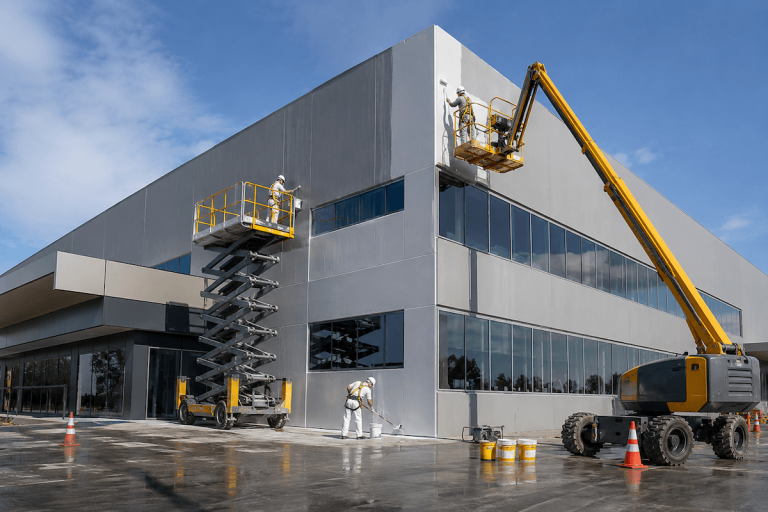
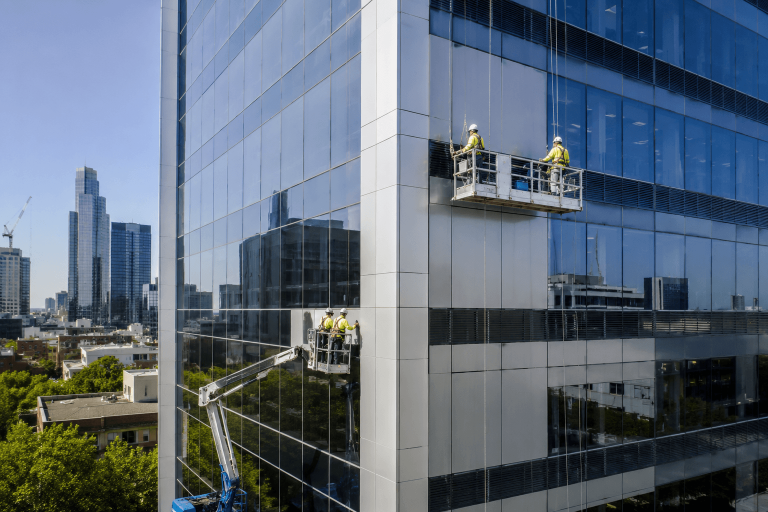
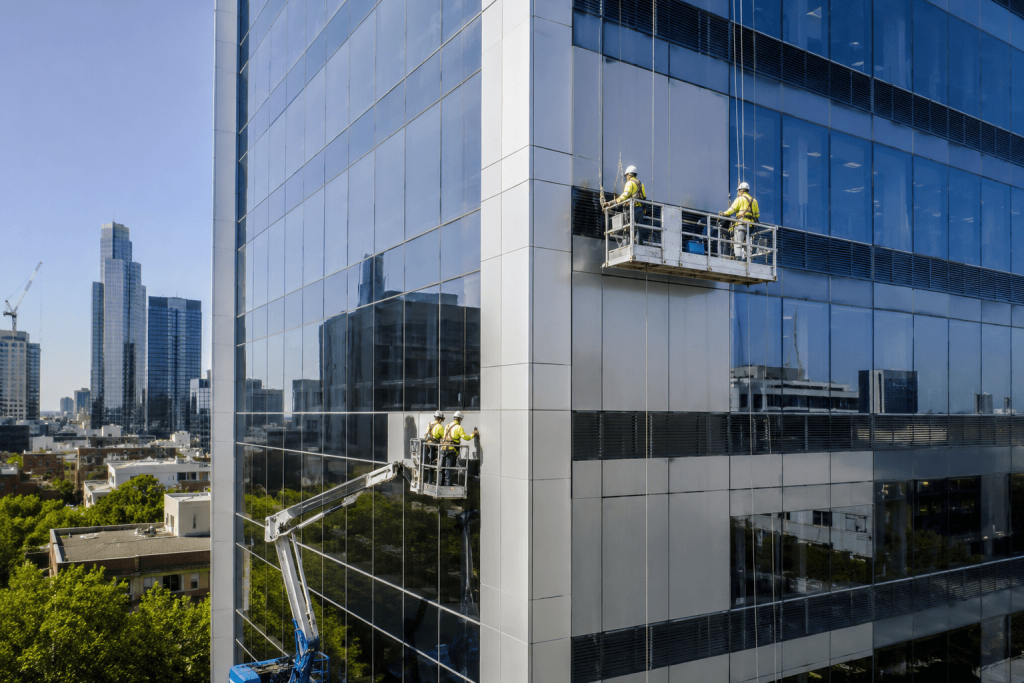
One of the biggest challenges associated with maintaining high-rise buildings is simply reaching the work area safely.
Depending on the building’s design, maintenance teams may utilise:
Selecting the most suitable access method depends on building height, façade design, surrounding access, and project requirements.
Proper planning helps ensure maintenance can be completed safely and efficiently while minimising disruption to building occupants.
High-rise commercial buildings represent substantial long-term investments that deserve equally long-term maintenance strategies.
Protective coating systems do far more than enhance appearance. They help shield valuable building materials from Melbourne’s changing climate while supporting the longevity, presentation, and performance of the property.
At Boss Advanced Painting Services, we understand the importance of maintaining commercial façades through careful planning, quality workmanship, and durable coating systems that perform in challenging environments.
Contact us today for a complimentary, no-obligation quote tailored to your project.
Contact our team todaye